The VR School
Financial LiteracyGive
Enroll
BIO
All Courses
UC A-G Section DLab ScienceWASC AccreditedHonors Course

Biology
Honors Lab Science

The Science of Living Systems

The most comprehensive agentic Honors Biology course. From molecular genetics to ecology — master every pillar of life science, build real lab investigation skills, and earn college-ready science mastery — guided by Dr. Maya Chen and SofAI.

Start with Dr. Maya
AP Resources
🔬
Honors Biology
Quick LinksBozeman Science Khan Academy Biology AP Seminar Exemplar ↗
UC A-G · Section D · Honors
Course Blueprint

Four Course Pillars

🔵

Molecular & Cell Biology

Foundation Pillar
~25%Units 1–2Cell structure, membranes, macromolecules
  • › Water chemistry, macromolecules, and enzyme function
  • › Prokaryotic vs. eukaryotic cell organization
  • › Fluid mosaic model and all forms of membrane transport

Pro Tip: Build strong molecular vocabulary first — every concept in biology connects back to how molecules interact. Draw and label cell diagrams from memory to cement organelle functions.

🟣

Lab Investigation Skills

Science Practice Pillar
ThroughoutAll UnitsExperimental design and data analysis
  • › Design controlled experiments with clear hypotheses and variables
  • › Construct graphs with fully labeled axes, units, and titles
  • › Analyze data: identify trends, calculate percent change, explain anomalies

Pro Tip: Lab skills are the backbone of honors biology. Practice writing experimental designs in the format: hypothesis → variables → control → procedure → predicted results graph.

🟠

Genetics & Evolution

Information Systems Pillar
~35%Units 3–4Heredity, gene expression, and natural selection
  • › DNA replication, transcription, translation, and gene regulation
  • › Mendelian genetics, meiosis, and patterns of inheritance
  • › Natural selection, Hardy-Weinberg equilibrium, and speciation

Pro Tip: Connect genetics to evolution: the variation that natural selection acts on comes from mutations, meiosis, and recombination. Understanding the link between DNA and phenotype makes both units click.

🟡

Ecology & Systems

Big Picture Pillar
~15%Unit 4Population, community, and ecosystem ecology
  • › Population growth models (exponential vs. logistic, carrying capacity)
  • › Community interactions and trophic energy flow
  • › Biogeochemical cycles and human impacts on ecosystems

Pro Tip: Ecology is where all of biology connects — energy flows through systems shaped by evolution and genetics. Always ask: how does this population/community interaction relate to natural selection?

Skill Targets

Four Mastery Areas

Each mastery area represents a cluster of skills that build deep, transferable science understanding — not just course content.

🦠

Cell Biology Mastery

  • Explain organelle function and the endosymbiotic theory
  • Describe all transport mechanisms across the plasma membrane
  • Design and interpret osmosis experiments with living cells
🧬

Genetics Mastery

  • Trace DNA → RNA → Protein through the central dogma
  • Solve Mendelian genetics problems including dihybrid crosses
  • Explain how mutations and gene regulation affect phenotype
🦎

Evolution Mastery

  • Apply Hardy-Weinberg equilibrium to real population scenarios
  • Distinguish directional, stabilizing, and disruptive selection
  • Read and interpret phylogenetic trees and cladograms
🌿

Ecology Mastery

  • Model population growth and identify limiting factors
  • Trace energy through trophic levels with 10% rule calculations
  • Explain biogeochemical cycles and human disruptions

Deep Understanding Roadmap

What mastery looks like in Honors Biology

🔬

Cell Biology: Explain any organelle's function and connect it to energy or information flow

⚡

Energetics: Trace energy from sunlight to ATP to cellular work in one coherent explanation

🧬

Genetics: Solve inheritance problems AND explain the molecular mechanism behind each pattern

🌿

Ecology: Model population dynamics and connect them to evolutionary pressures

Honors Biology Curriculum

Four Biology Units

🧪
UNIT 18–11%

Chemistry of Life

Expand ›

Key Topics

  • Water's properties (cohesion, adhesion, polarity, specific heat)
  • Macromolecules (carbohydrates, lipids, proteins, nucleic acids)
  • Enzymes (activation energy, substrate specificity, inhibition)
  • pH and buffers

Key Terms

enzyme
protein catalyst that lowers activation energy
substrate
molecule that binds to enzyme active site
denaturation
loss of protein shape and function
hydrophobic
water-fearing (nonpolar)
buffer
solution that resists pH change
monomer
building block of a polymer
Investigation Practice Prompt

Lab investigation: A scientist adds increasing temperature to an enzyme-substrate solution and measures reaction rate. The rate increases to 37°C then drops sharply at 45°C. Explain the molecular mechanism behind this curve. What would happen if you add a competitive inhibitor at 37°C?

Practice with Dr. Maya →

Curated Video Lessons

Properties of Water — AP Biology
content

Properties of Water — AP Biology

Bozeman Science11 min
Macromolecules — Biological Molecules
content

Macromolecules — Biological Molecules

Khan Academy14 min
Enzymes — Crash Course Biology #2
review

Enzymes — Crash Course Biology #2

Crash Course10 min
🦠
UNIT 210–13%

Cell Structure and Function

Expand ›

Key Topics

  • Prokaryotic vs. eukaryotic cells
  • Organelle function (mitochondria, chloroplast, ER, Golgi, nucleus)
  • Cell membrane structure (fluid mosaic model)
  • Membrane transport (diffusion, osmosis, active transport, endocytosis, exocytosis)

Key Terms

plasma membrane
phospholipid bilayer surrounding the cell
organelle
specialized membrane-bound structure
osmosis
diffusion of water across a selectively permeable membrane
tonicity
relative solute concentration of two solutions
endosymbiosis
theory that mitochondria and chloroplasts evolved from engulfed prokaryotes
vesicle
small membrane-bound sac for transport
Investigation Practice Prompt

Design an experiment to test whether plant cells in a high-salt solution undergo plasmolysis. Identify your independent variable, dependent variable, and control. Describe what you would observe under a microscope.

Practice with Dr. Maya →

Curated Video Lessons

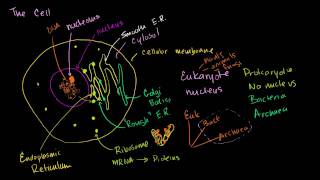
Eukaryotic Cell Tour — Bozeman Science
overview

Eukaryotic Cell Tour — Bozeman Science

Bozeman Science13 min
Osmosis and Cell Transport
content

Osmosis and Cell Transport

Amoeba Sisters12 min
Cell Transport — AP Biology
practice

Cell Transport — AP Biology

Khan Academy9 min
⚡
UNIT 312–16%

Cellular Energetics

Expand ›

Key Topics

  • Photosynthesis (light reactions in thylakoid + Calvin cycle in stroma)
  • Cellular respiration (glycolysis → pyruvate oxidation → Krebs cycle → ETC)
  • ATP synthesis (chemiosmosis)
  • Free energy and ΔG, Fermentation (lactic acid and alcoholic)

Key Terms

ATP
adenosine triphosphate, primary cellular energy currency
NADH
electron carrier in cellular respiration
chlorophyll
pigment that absorbs light energy
stroma
fluid-filled space in chloroplast where Calvin cycle occurs
chemiosmosis
ATP synthesis via H+ gradient through ATP synthase
ΔG
change in free energy (negative = spontaneous)
Investigation Practice Prompt

Lab investigation: You are studying the rate of photosynthesis in Elodea aquatic plants. Design an experiment to measure the effect of light intensity on oxygen production rate. Include: hypothesis, independent/dependent variables, controls, procedure, and predicted results graph.

Practice with Dr. Maya →

Curated Video Lessons

Photosynthesis — Bozeman Science
content

Photosynthesis — Bozeman Science

Bozeman Science15 min
Cellular Respiration — Bozeman Science
content

Cellular Respiration — Bozeman Science

Bozeman Science17 min
ATP & Respiration — Crash Course Biology
review

ATP & Respiration — Crash Course Biology

Crash Course13 min
📡
UNIT 410–15%

Cell Communication and Cell Cycle

Expand ›

Key Topics

  • Signal transduction (reception → transduction → response)
  • G protein-coupled receptors, Tyrosine kinase receptors
  • Cell cycle (G1, S, G2, M phases), Mitosis stages
  • Cyclins and cell cycle checkpoints, Apoptosis vs. cancer

Key Terms

ligand
signal molecule that binds to receptor
second messenger
small molecule that relays signal inside cell (e.g., cAMP)
cyclin
protein that regulates CDK to control cell cycle progression
apoptosis
programmed cell death
checkpoint
regulatory point that pauses cell cycle
proto-oncogene
normal gene that can become cancer-causing oncogene
Investigation Practice Prompt

Investigation: A mutation prevents a cell's G1 checkpoint from functioning correctly. Predict what effect this would have on cell division. How might this mutation lead to cancer? Connect your answer to the roles of tumor suppressor genes and oncogenes.

Practice with Dr. Maya →

Curated Video Lessons

Cell Signaling — Bozeman Science
content

Cell Signaling — Bozeman Science

Bozeman Science12 min
The Cell Cycle — Bozeman Science
content

The Cell Cycle — Bozeman Science

Bozeman Science11 min
Cancer — Crash Course Biology
application

Cancer — Crash Course Biology

Crash Course14 min
Assessment Suite

Three Assessment Types

Honors Biology assessments develop real science skills — lab investigation, scientific writing, and data interpretation — not just content recall.

Assessment Coach →
🧪~30–35%
Lab Investigation

Lab Report

Core Assessment · Completed over 1–2 weeks

Write a formal scientific report for a completed lab investigation. Includes introduction, methods, results (graphs and tables), discussion, and conclusion using claim-evidence-reasoning.

Scoring Criteria
· Introduction: states purpose, background, and testable hypothesis
· Methods: clear, replicable procedure with identified variables
· Results: properly labeled graphs and data tables with units
· Discussion: interprets results, explains anomalies, connects to biology
· Conclusion: CER format — Claim, Evidence, Reasoning
Success Strategy
State your hypothesis in 'if...then' format with a clear biological reasoning
Label every graph axis with the variable name AND units — always include a title
In your discussion, explain WHY the data looks the way it does using biological mechanisms
Address anomalies directly — explaining unexpected results shows scientific thinking
Use precise biological vocabulary throughout — terminology earns points
Model Opener

Hypothesis: If [independent variable], then [dependent variable will change in specific direction], because [biological mechanism]. The purpose of this investigation is to [state purpose].

📊~35–40%
Unit Assessment

Constructed Response

Short Answer · In-class assessment

Answer targeted questions about biological concepts, mechanisms, and connections. Requires 2–5 sentence responses using precise vocabulary and clear reasoning.

Scoring Criteria
· Accuracy: uses correct biological vocabulary and concepts
· Completeness: addresses all parts of the prompt
· Reasoning: connects claim to a biological mechanism
· Precision: does not include contradictory information
Success Strategy
Read the full question before writing — identify every part that needs an answer
Use the vocabulary from class — 'natural selection' not 'survival of the fittest'
Explain the mechanism, not just the outcome — say WHY, not just WHAT happens
Connect your answer to a broader concept when possible (e.g., energy, evolution)
Answer every part — a partial answer earns partial credit
Model Opener

The [structure/process] functions to [role], because [mechanism]. This occurs when [condition], which results in [outcome] due to [biological principle].

📈~25–30%
Unit Assessment

Data Analysis Question

Graph & Data Interpretation · In-class assessment

Interpret graphs, data tables, or experimental results. Answer questions about trends, calculations, and biological explanations for the patterns you observe.

Scoring Criteria
· Trend identification: states direction AND magnitude of change
· Calculation: correct math shown with appropriate units
· Explanation: connects data trend to biological mechanism
· Inference: draws a valid conclusion supported by evidence
Success Strategy
Describe trends with direction AND magnitude — not just 'it increased,' say 'it increased by 40%'
Always show your calculations and include units in numerical answers
Connect every trend to a biological mechanism — why did the data change?
Distinguish between correlation and causation in your explanations
Model Opener

According to the data, [trend description]. Between [condition 1] and [condition 2], the [variable] [increased/decreased] by [amount], suggesting that [biological explanation].

Honors Biology Success

Six Tips for Mastering Honors Biology

🔬

Do every lab — and write up what you observed before looking at the answer. Scientific thinking develops through practice, not just reading.

📊

Practice graph interpretation weekly. Label axes with variable names AND units, give graphs a title, and always describe trends with direction and magnitude.

🧬

Learn vocabulary in context, not isolation. Every term connects to a mechanism — enzyme, substrate, and active site are only meaningful together.

⚡

Trace energy through systems. From sunlight → ATP → muscle contraction, follow the energy and you'll understand cellular energetics deeply.

🌿

Connect units to each other. Ecology makes sense when you see it through evolution. Genetics becomes powerful when you connect it to natural selection.

🤝

Use Dr. Maya for concept clarification, lab design, and practice questions. Ask specific questions — 'Why does osmosis stop?' not 'Explain osmosis.'

Curated for Mastery

Practice Resources & Study Tools

🏛
OFFICIALFREE

CollegeBoard AP Biology

Official CED, unit guides, sample FRQs, and scoring guidelines.

Open resource
📂
OFFICIALFREE

Past AP Biology FRQs (2013–2024)

Every past FRQ with scoring guidelines. Practice at least 3 full sets under timed conditions.

Open resource
🎥
HIGHLY RECOMMENDEDFREE

Bozeman Science (Paul Andersen)

The #1 AP Biology YouTube channel. Paul Andersen covers every unit, every lab, every skill with crystal clarity. Essential.

Open resource
📺
CONTENT REVIEWFREE

Crash Course Biology

40-episode series covering all AP Bio content. Watch at 1.25x for review, 1x for new concepts.

Open resource
🐛
VISUAL LEARNINGFREE

Amoeba Sisters

Excellent visual explanations of genetics, cell processes, and ecology. Great for visual learners.

Open resource
📚
COMPREHENSIVEFREE

Fiveable AP Biology

Complete course review, unit summaries, FRQ practice, and live study sessions.

Open resource
🎯
FREE PRACTICEFREE

Khan Academy AP Biology

Free practice questions organized by AP unit. Use alongside Bozeman for concept reinforcement.

Open resource
📝
PRACTICE MCQ

Albert.io AP Biology

High-quality AP-style multiple choice practice. Excellent for mimicking the actual exam experience.

Open resource
AI-Powered Progress

16-Week Mastery Study Plan

Weeks 1–4

Phase 1: Foundation — Chemistry, Cell Structure, Energetics

  • Read Campbell Biology Ch. 1-10 for units 1-3
  • Watch all Bozeman Science videos for Units 1-3
  • Daily: one graph-reading and data interpretation exercise
  • Lab report practice: write one short CER response on cell structure per week
Weeks 5–8

Phase 2: Information Systems — Cell Signaling, Heredity, Gene Expression

  • Deep dive: meiosis animations, DNA replication model, gene regulation diagrams
  • Master Punnett square and dihybrid cross problems (practice 3 per session)
  • Lab design practice: write one full experimental design per week with a predicted graph
  • Watch Bozeman Science DNA/gene expression playlists
Weeks 9–12

Phase 3: Evolution, Ecology, and Assessment Mastery

  • Read all Ecology and Evolution units with emphasis on population math
  • Practice Hardy-Weinberg calculations until fluent
  • Write 2 constructed responses per week connecting evolution to genetics
  • Complete 3 practice data analysis sets using real ecological data
Weeks 13–16

Phase 4: Synthesis and Deep Understanding

  • Review cross-unit connections: how do molecular biology, genetics, and evolution link?
  • Review all lab reports and identify patterns in your scientific writing
  • Practice with Dr. Maya Chen: ask for a full mock lab investigation
  • Final synthesis: map all 4 course pillars and their connections on one diagram
Agentic AI Tutoring

Ask Dr. Maya Chen

Dr. Maya Chen is your Honors Biology expert — every lab investigation, concept explanation, and study strategy. SofAIconnects Biology to every other subject you're studying.

🧪 Help me design a controlled experiment for a biology lab investigation⚡ Explain photosynthesis and cellular respiration — and how they connect🧬 Walk me through solving a dihybrid cross step by step🔬 I need to write a CER conclusion for my osmosis lab — help me structure it
🌟 Next Level

Your Biology Skills Are an Academic Superpower — Use Them in AP Seminar

Honors Biology builds exactly the skills AP Seminar demands: evidence-based argumentation, data analysis, and scientific reasoning. See how Jiang combined these disciplines to build an outstanding portfolio recognized at the national level.

View AP Seminar ExemplarExplore AP Seminar →
🎓
🔬

Ready to Master Honors Biology?

Enroll in the most comprehensive, AI-powered Honors Biology course available. WASC accredited. UC A-G Section D approved. Build the college-ready science foundation that matters.

Browse All Courses

WASC Accredited · UC A-G Approved · Honors Course · Section D Lab Science

Financial literacy should belong to everyone

Help California students build money confidence.

Give to the endowment →Open financial literacy hub
VR
The VR School

The world's first accredited Spatial Intelligence school. WASC-accredited. UC A-G approved. 402+ students. 20+ countries.

520 Lasuen Mall #200, Stanford, California, CA 94309
(650) 422 9180
admissions@thevrschool.org
WASC Accredited

Fully Accredited for Grades 6–12 by ACS WASC

Code: 43 46070 999Grades 6–12

World Labs Partner ✦

Spatial Intelligence · Marble · Spark.js

School

  • About Us
  • Staff
  • Accreditation
  • School Profile
  • Endowment
  • Corporate Giving
  • Careers

Programs

  • UC A-G Courses
  • California Personal Finance
  • CVC Dual Enrollment
  • CVC Pathway OS
  • iBuildme
  • iBuildme App
  • iTeachXR LMS
  • AP Seminar Studio
  • Credentials
  • AI Program
  • VR Labs
  • VR Experiences
  • VR Network

Spatial Intelligence

  • Spatial Lab ✦
  • Moonshots TV
  • World Labs Marble ↗
  • The School That Shouldn't Exist
  • Website Evolution Archive
  • Media & Stories
  • VR Explorer

Support

  • Help & Support
  • Contact
  • Blog
  • Headset Safety
  • Privacy Policy
  • Terms of Service

© 2026 The VR School · All rights reserved · Spatial Intelligence Lab ✦

402+ students · Stanford · Palo Alto · China · Singapore

91% Math · 89% Science · 86% ELA · WASC · UC A-G